"Human Rights in an Ecological Era"
William Aiken examines the tradition of human rights and their role in our currently increasing environmental awareness.
Diane Saxe argues that a stronger “fiduciary” duty is required where corporations take risks with the environment and that economic activities must move from open to closed (sustainable) systems.
The anthropocentric ethic implicit in all solutions regarding global commons is contrasted with the ecocentric one which may be necessary to preserve the biosphere in the future.
The article explores the possibilities of a new ethic that incorporates the phenomenon of environmental crisis and aims at changing people’s outlooks and behaviour.
Michael Everett examines how environmental movements develop and how they deal with economic counterforces and motivate political actors to pass effective environmental regulations.
An evolutionary analysis of history suggests that technology and morality can and will respond to a clearly perceived future threat to civilization. But will our response be fast enough?
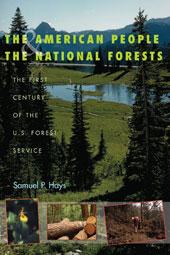
A history of the role of American society in shaping the policies of the United States Forest Service.
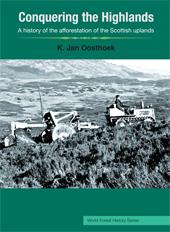
Jan Oosthoek tells in this book the story of how 20th century foresters devised ways to successfully reforest the poor Scottish uplands.
This book offers a history of the conservation movement’s origins and provides a context for understanding contemporary enviromental problems and possible solutions.
The book examines the natural and economic resource competition between Phoenix and Tucson and the other factors contributing to the divergent growth of the two cities.