


Multimedia | film profile
Ethos: A Time For Change
This film examines political and economic crises and the role of a corporate military-industrial context in undermining democracy, and is narrated by actor Woody Harrelson.
This film examines political and economic crises and the role of a corporate military-industrial context in undermining democracy, and is narrated by actor Woody Harrelson.

This film uses the New Mexico chile pepper to investigate genetically modified foods and criticizes the practices of the companies involved.

This film examines the development of a new, more localized food system in Venezuela.

This film follows the inhabitants of an ancient Carpathian village as they resist its destruction by a Romanian-Canadian corporation, which plans to turn it into Europe’s largest mine for gold and silver.

This film reports on the eviction of villages near Mubende by the Ugandan army to clear land for a coffee plantation.

This film follows a court case between Canadian mining companies and author Alain Deneault following his critique of industry practices.

This film recounts the formation and rise of Greenpeace as one of the world’s most prominent environmentalist organizations.

In case studies ranging from the Early Modern secondhand trade to utopian visions of human-powered vehicles, the contributions gathered here explore the historical fortunes of bicycling and waste recycling—tracing their development over time and providing valuable context for the policy successes and failures of today.

National parks are one of the most important and successful institutions in global environmentalism. Shifting the focus from the usual emphasis on national parks in the United States, Civilizing Nature adopts an historical and transnational perspective on the global geography of protected areas and its changes over time.
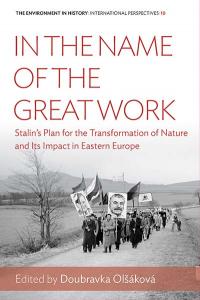
Beginning in 1948, the Soviet Union launched a series of wildly ambitious projects to implement Joseph Stalin’s vision of a total “transformation of nature.” By the time of Stalin’s death, however, these attempts at “transformation” had proven a spectacular failure. This richly detailed volume, In the Name of the Great Work follows the history of such projects in three communist states—Poland, Hungary, and Czechoslovakia—and explores their varied, but largely disastrous, consequences.