

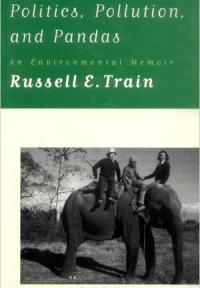
Multimedia | book profile
Politics, Pollution and Pandas: An Environmental Memoir
A memoir of the author’s life and his strong interests in wildlife, conservation, and major environmental organizations.
A memoir of the author’s life and his strong interests in wildlife, conservation, and major environmental organizations.
Sandlos and Keeling explore Indigenous resistance to arsenic pollution. Indigenous communities mobilized knowledge around environmental pollution and its health impacts. The authors show how this resistance to environmental racism is connected to other Indigenous struggles over industrial development and to issues such as land claims, sovereignty, and colonial dispossession.

In episode 47 of Nature’s Past, a podcast on Canadian environmental history, author Ryan O’Connor discusses the ENGO Pollution Probe and the early years of environmental activism in Canada with Sean Kheraj.

Hub Zwart presents an environmental analysis of Henrik Ibsen’s A Public Enemy.

This paper extends the argument in H.L.A. Hart’s “Are there any natural rights?” to argue that there is an environmental moral right against pollution.

The Machine upgraded by Dufrayer was able to pump the impressive amount of 20,000 m3 per day but new concern threatened its existence: the Seine waters growing pollution.
This paper examines the relationship between technologies that aim to remediate pollution and moral responsibility. The authors argue that such technologies do not exculpate polluters of responsibility.
While some have argued that, in democratic societies, people simply have a right to a participatory role, others base arguments for public participation on the idea that lay people may have access to knowledge which is unknown to officially sanctioned experts. This paper reports on a novel empirical approach called “participatory modelling” to analyse and capture such “lay” understandings.
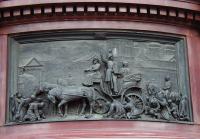
The 1831 cholera riot in St. Petersburg was an extreme result of the city’s immense water pollution problem and led to social conflict between the educated classes and the poor people.
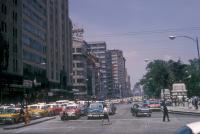
A noxious air forces Mexico City to confront its unwavering urbanizing and industrializing mission in the late twentieth century.