


Multimedia | journal article
Review of Pushing our Limits: Insights from Biosphere 2 by Mark Nelson
Krishna AchutaRao reviews the book Pushing our Limits: Insights from Biosphere 2 by Mark Nelson.
Krishna AchutaRao reviews the book Pushing our Limits: Insights from Biosphere 2 by Mark Nelson.
Have you ever wondered what big data baseball has to do with air pollution? In Episode 7 of Crosscurrents, host John Sandlos speaks with Dr. Anthony Heyes, an environmental economist researching the impact of urban air pollution.
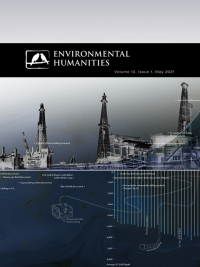
This article names and examines carbon vitalism, a strain of climate denial centered on the moral recuperation of carbon dioxide—and thus fossil fuels.
There is an urgency and a fracture to Australian environmental history…
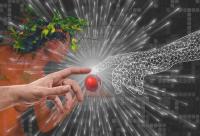
A discussion on the terms multispecies, non-human, and more-than-human.
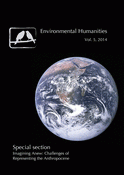
In his article for the special section “Living Lexicon for the Environmental Humanities,” Cameron Muir asks, “how do we respond to the broken, as scholars, writers, artists? And what can the broken tell us?”

Shannon Cram explores the slippery subjectivities of nuclear waste and nature at Washington State’s Hanford Nuclear Reservation, examining how this space is framed as both pristine habitat and waste frontier. She examines Hanford’s biological vector control program through the fruit fly and discusses how vector control uses instances of nuclear trespass to articulate the boundary between contaminated and uncontaminated. She concludes that nature is being recruited to do what the U.S. Department of Energy cannot: solve Hanford’s nuclear waste problem.
In this episode from the New Books Network podcast, Evan Friss is interviewed on his book, The Cycling City: Bicycles and Urban America in the 1890s.
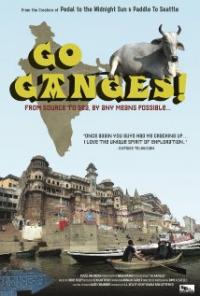
This film follows two friends as they travel the full length of the sacred Ganges River in India.
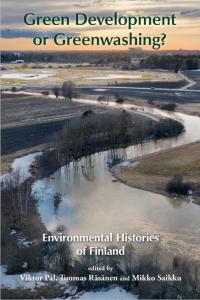
An edited volume examining and challenging the reputed “greenness” of Finland.