

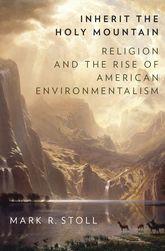
Multimedia | book excerpt
Inherit the Holy Mountain: Religion and the Rise of American Environmentalism
Excerpt from Mark R. Stoll’s Inherit the Holy Mountain: Religion and the Rise of American Environmentalism.
Excerpt from Mark R. Stoll’s Inherit the Holy Mountain: Religion and the Rise of American Environmentalism.

This volume of RCC Perspectives considers what it means to work across disciplines in environmental studies and how such projects can best be realized.
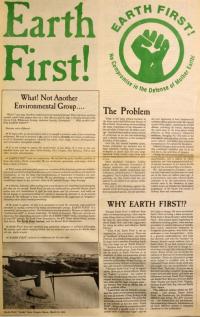
This introductory guide to the Earth First! movement was produced by The Earth First! Journal for Earth First! local groups. It outlines the purpose, philosophy, and tasks of the Earth First! movement, as well as information about its foundation, journal, wilderness preservation, local groups, monkeywrenching, and direct action.

In her article Annelie Sjölander-Lindqvist highlights several examples of how environmental architecture has combined success and failure at taking a broader view of environmental questions.
Martin Mulligan explores the Australian conservation movement, arguing that future conservation strategies need to tackle “frontier mentality” and a heavy reliance on scientific rationale. He suggests learning from the Australian Aborigines and non-rational approaches to nature conservation.
In this Review Essay, Karyn Pilgrim uses a vegetarian ecofeminist framework to examine the ethics of meat eating, arguing that a moral ambivalence prevails in the rhetoric of some popular nonfiction books that embrace omnivorous eating.
Within a vegetarian ecofeminist framework, Pilgrim analyses three popular nonfiction books that construct narratives around the story of meat.
Amy M. Hay examines the history of Agent Orange and its environmental and human consequences—a story that represented a transnational history.

With over 25 percent of its land set aside in national parks and other protected areas, Costa Rica is renowned worldwide as “the green republic.” Sterling Evans explores the establishment of the country’s national park system.
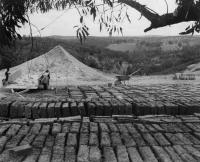
Environmental building in Australia as a form of communing with nature.