

Multimedia | Env. blogs & websites
Climates of Migration
This project looks at the historical intersections between environmental change and migration, and is particularly interested in climate-induced movements of people in the past.
This project looks at the historical intersections between environmental change and migration, and is particularly interested in climate-induced movements of people in the past.

In this episode of ASLE’s official podcast, Jemma Deer and Brandon Galm interviews Sarah Jaquette Ray and Stephen Siperstein on the topic of climate change pedagogy.

Stephen M. Gardiner discusses climate change, intergenerational ethics, and the convergence of problems which make climate change “a perfect moral storm.”
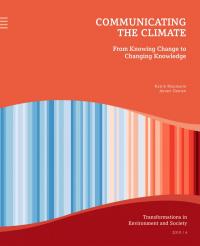
Walsh argues that science should be decentered in communicating about climate change.
Tabak explores the potential of novels for communicating about climate change.

In this chapter of her virtual exhibition, “Human-Nature Relations in German Literature,” Sabine Wilke examines mountains and glacial environments in German-language literary descriptions. Whereas the German Romantic poets still highlighted mountainous nature as deeply ambiguous, Goethe’s Faust tried to understand mountainous nature in its materiality through scientific studies. Modernism focuses on the more often destructive results of human-nature entanglements. For the German-language version of this exhibition, click here.
Reflections on Amitav Ghosh’s Gun Island by Sabina Magagnoli.
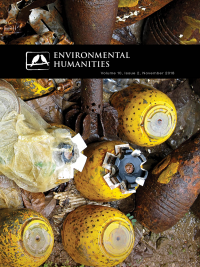
Matthew Schneider-Mayerson investigates the impact of climate fiction on American readers through a qualitative survey, and assesses the results based on concepts borrowed from ecocriticism, environmental psychology, and environmental communication.
Margret Grebowicz argues that James Balog’s Extreme Ice Survey (EIS), in particular the time-lapse films of glaciers receding, presents a unique example of what Guy Debord calls the ”tautological” nature of spectacle, its capacity to serve as its own evidence at the same time as it becomes a mode of relation among people.
This study is based on the empirical investigation of the climate change adaptation measures adopted by the farmers in the Chambal basin.