

Perspectives Article
Decentering Science in Climate Communication
Walsh argues that science should be decentered in communicating about climate change.
Walsh argues that science should be decentered in communicating about climate change.
Oomen argues that science has an important role in climate communication as a common ground and honest broker.
Ashcroft explores how citizen science can connect professional scientists and the public.
Shortis suggests that the World Park Antarctica campaign offers a positive example of an environmental campaign that includes but does not center scientific authority.
Brill explores the relationship between “Science” and “the sciences”, and the political potential of the two, in the context of research cooperations involving indigenous groups.
Born uses Critical Theory to explore the role of science in climate communication.
Gebhardt Fearns explores the potential of the immersive arts for communicating climate change.
Tabak explores the potential of novels for communicating about climate change.
Martinez emphasizes the importance of adapting climate communication strategies to local situations.
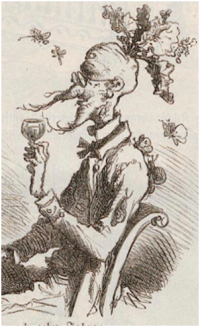
Since the mid-nineteenth century, vegetarianism and veganism have attracted public attention and provoked controversial discussions in Europe. The exhibition traces the development of the discourse on vegetarianism in caricatures, satirical drawings and poems that mock the movement, its worldview, social structures, and eating habits.