"The Dynamics of Framing Environmental Values and Policy: Four Models of Societal Processes"
Clark A. Miller proposes four models of societal processes by which framing occurs, concluding with ideas for further research.
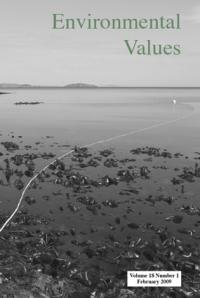
In this paper the author discusses three possible alternative interpretations of the meaning of places and place attachment in ‘new nature’ projects, and shows how all three imply a different view on human identity and history.
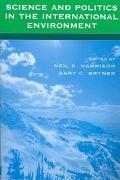
This book seeks to explain what science and politics are in the context of environmental policymaking and how the interplay of science and politics influences international environmental policy.
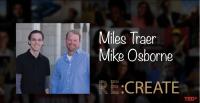
Inspired by courses they’ve developed at Stanford, Mike Osborne and Miles Traer created the Generation Anthropocene podcast, a volunteer-based audio show featuring thought leaders.
Laurel Peacock on Brenda Hillman’s ecopoetic practice and how we can shift our understanding of our affective relationship to the environment.
In the afterword of a special section on toxic embodiment, Stacy Alaimo distills the collection’s argument for attending to the ways environments, human bodies, and nonhuman bodies are transformed by anthropogenic substances.
Former RCC Fellow Helen Rozwadowski presents her perspectives on the ocean and its history.
Excerpt from Eco-Theology: Essays in Honor of Sigurd Bergmann. Professor Sigurd Bergmann is a former fellow at the Rachel Carson Center.
In this commentary, Stefan Helmreich considers how Hokusai’s famous woodblock print, The Great Wave, has recently been leveraged into commentaries upon the Anthropocene, and how the image has been adapted to speak to the contemporary human-generated global oceanic crisis.
In this episode from the New Books Network podcast, Alice Crary and Lori Gruen are interviewed on their recent book, Animal Crisis: A New Critical Theory.