

Exhibition chapter
Whale Fall | Ghosh in Munich
A poetic descent into illness parallels a whale fall, uncovering beauty, vulnerability, and new forms of living.
A poetic descent into illness parallels a whale fall, uncovering beauty, vulnerability, and new forms of living.

Lajos Rácz, Carson Fellow from June 2010 to June 2011, talks about his research project, “An Environmental History of Hungary.”

This issue of Environment and History completes a third year of the new journal, and presents a useful opportunity for reflection about the state of the discipline.

This film explores how various communities around the world are transitioning to a more sustainable and local way of life.
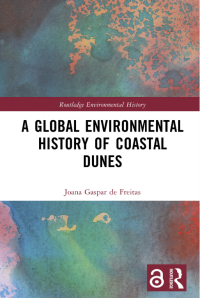
A monograph on the history of dunes.
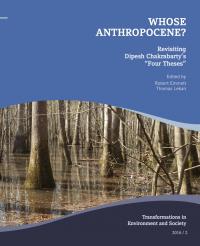
In “The Climate of History: Four Theses,” Dipesh Chakrabarty examined the idea of the Anthropocene—the dawn of a new geological period dominated by human activities—in the context of history and philosophy, raising fundamental questions about how we think historically in an era when human and geological timescales are colliding.This volume of RCC Perspectives offers critiques of these “Four Theses” by scholars of environmental history, political philosophy, religious studies, literary criticism, environmental planning, geography, law, biology, and geology.

Dale Jamieson introduces the special issue by highlighting American perspectives on different facets of environmental values. These span spiritual and aesthetic dimensions, moral, political, and religious values, and conflicting values in the climate change debate.
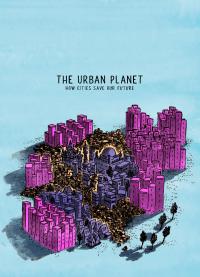
This comic The Urban Planet: How Cities Save Our Future condenses into an illustrated story the fundamental findings of Humanity on the Move: Unlocking the Transformative Power of Cities, a report published by the German Advisory Council on Global Change (WBGU).
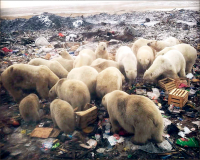
Polar bears invade Russian archipelago and town in Novaya Zemlya, northern Russia.

How birds and poetry reacquaint us with an awareness of history and feelings of loss in Anthropocene nature reserves.