Wild Earth 12, no. 4
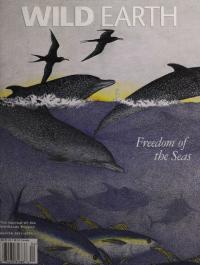
Wild Earth 12, no. 4, features an interview with Sylvia Earle on “Our Oceans, Ourselves,” essays on worldwide fishing and consumer conscience, on launching a sea ethic, and the food web complexity in kelp forest ecosystems.
Wild Earth 13, no. 1, features essays that present contrasting views on mountain biking in the wilderness, the Clovis culture and origins of ecological awareness, as well as the National Wilderness Preservation System and wilderness abuse.
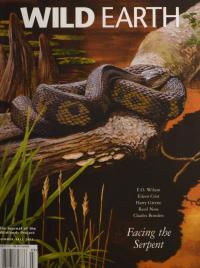
Wild Earth 13, no. 2/3, features essays on the biological and cultural significance of snakes, the populist right in America, rednecks as wildlife managers, and mosquitoes across the Florida Everglades.
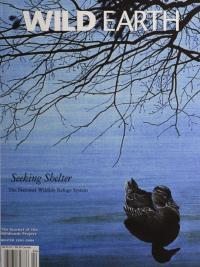
Wild Earth 13, no. 4, focuses on the National Wildlife Refuge System with essays on its history, the wildlife refuge in Southeastern Oregon, wildlands ofthe Great Plains, and pronghorn extinction in the Sonoran Desert.
Wild Earth 14, no. 1/2 features essays on protecting the national forest wilderness after the Wilderness Act, natural history going extinct, carnivore conservation in the Rocky Mountains, and questions of fertility.
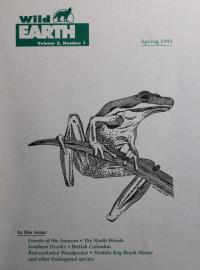
Wild Earth 3, no. 1 on the Northwoods wilderness recovery, the Southern Ozarks, endangered species like the Red-Cockaded Woodpecker and the Perdido Key Beach Mouse, and the breadth and the limits of the deep ecology movement.
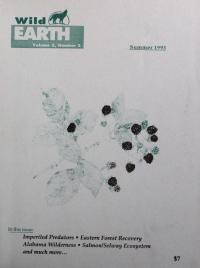
Wild Earth 3, no. 2 on imperiled predators like bears and lions, the Eastern forest recovery, Alabama wildlands, deep ecology in the former Soviet Union, and the salmon/selway ecosystem.
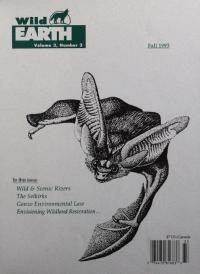
Wild Earth 3, no. 3 features articles on protecting biodiversity in the Selkirk Mountains, preserving biodiversity in caves, restoring the Wild Atlantic Salmon, and changing state forestry laws.
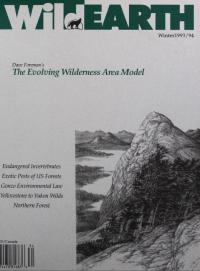
Wild Earth 3, no. 4 puts the spotlight on endangered invertebrates, exotic pests in US forests, the Northern Rockies Ecosystem Protection Act, and keywords of conservation and environmental discourses.
In this first issue of Live Wild or Die! the editors ask, “why be modest in the face of impending doom? Live wild or die!” Toby discusses how biocentrism can lead to destruction of nature; Feral Faun explains why there is more to the Earth First! movement and why the name should be left behind; Sneaky Driller sheds light on tree spiking; and Sheriff Jim Weeds explains the deeper meaning of ecoterrorism.