

Multimedia | journal article
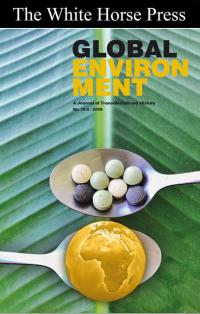
“Controlling the Planet’s Health: From Homeostasis and Geophysiology to the Planetary Health Watch”
An article on the limits of a cybernetic conception of planetary health.
An article on the limits of a cybernetic conception of planetary health.
Editorial to “Imagining Planetary Health,Wellbeing and Habitability: Perspectives from the Environmental Humanities,” a special issue of Global Environment.
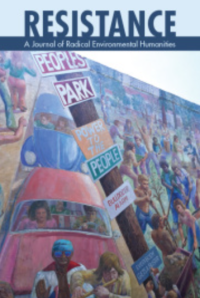
Introduction to the special issue “Garbage, Discarded Governmentalities, and the Ecosystem—Tensions and Resistances.”
A reflection on how environmental history emerged in Sweden.
Full article titled “To Delight and Misinstruct: Strategic Environmental Narratives in New Yorker Fiction” by Matthew Schneider-Mayerson, Christopher A. Walker, Veronica Romero, Kiara McCellon, Claire Campbell, Moya Stringer, et al.
Article by Rachel Carson Center alumna Mengxi Kou and colleagues on how protected areas can conserve wildlife while also safeguarding people’s livelihoods.

Sometimes the link between environmental issues and creative action is a matter of personal expression. In “One Woman’s Waste Is Another Woman’s Treasure,” Regina M. Bichler, a waste and sustainability researcher, interviews the artist Kim Curtis on using environmental struggles and successes as artistic inspiration. Their conversation spans Curtis’s multimedia artworks, political strategies for minimizing environmental harms, and the roles that individuals must play in crafting ecological futures.
Historian Timothy LeCain is interested in the bridge between humans and materiality. Last year, while driving his SUV home through the mountains of Montana, a large truck pulled in front of him and released a cloud of dense, noxious smoke. Like many cyclists, hybrid car drivers, and “No Kings” protestors, LeCain had been “coal rolled.” His tongue-in-cheek essay, “Thank God for the Coal Rollers,” explores the practice’s culture, intended victims, and even the unintended good it might enact.
In “Mapped Futures, Vanishing Places,” literary scholar Kumiko Kiuchi portrays the simple act of walking as an opportunity to inherit shared memory. Her writing takes off from Tokyo’s artificial waterfront into a creative space stretching from past generations into imagined futures, reminding us to remain “attentive to what cannot be fully possessed or understood.”