Taking Up Space: Men, Masculinity, and the Student Climate Movement
Jody Chan and Joe Curnow analyze the different gender and race dynamics in the student climate movement, asking why White men’s participation is constructed as being more valuable.
Reinaldo Funes Monzote traces the history of the Latin American and Caribbean Society of Environmental History, also known as SOLCHA.
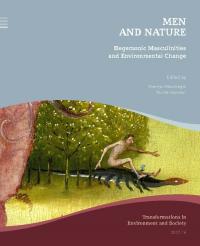
The essays in this collection explore how masculine roles, identities, and practices shape human relationships with the more-than-human world.
Saving the Planet is a history of US conservation and environmental movements in the twentieth century.
Although simply reducing food miles does not guarantee a more sustainable diet, choosing to participate in alternative local food systems instead of the conventional food system is a sure way to increase your access to environmentally friendly food and to support more ecologically sustainable agricultural practices.
Wrenched captures the passing of the monkey wrench from the pioneers of eco-activism to the new generation who carries Edward Abbey’s legacy into the 21st century. The fight continues to bring awareness to the need for protection of the last bastion of the American wilderness - the spirit of the West.
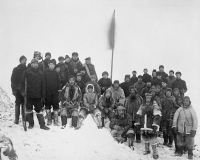
Apart from a diverse and previously unknown fauna, explorations and receding ice caps have uncovered a sought-after abundance of natural resources in the Arctic region. Historian Elena Baldassarri argues that the exploitation of these resources not only constitutes a threat to the non-human world, but also to the Inuit people. This is a chapter of the virtual exhibition “The Northwest Passage: Myth, Environment, and Resources.”
To whom does the Northwest Passage belong? Historian Elene Baldassarri writes about the politics of the Far North. This is a chapter of the virtual exhibition “The Northwest Passage: Myth, Environment, and Resources.”