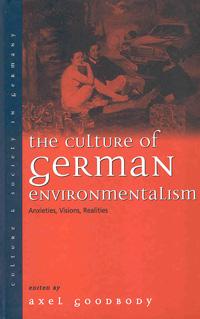
The Culture of German Environmentalism: Anxieties, Visions, Realities
The Culture of German Environmentalism portrays the breadth of environmentalism in Germany through an analysis of the Green Party, its “green” literature, media, and politics.
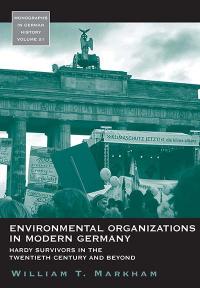

Environmental Organizations in Modern Germany narrates the rise and adaptation of the German environmental movement, as well as its dilemmas and strategies to adjust to changing sociopolitical policies and contexts.
This historiographical essay outlines and discusses major trends within European environmental history by highlighting recent discussions and future possibilities regarding collaboration across national borders and contexts, and ultimately arguing for more transnational cooperation within the field of environmental history.
Although simply reducing food miles does not guarantee a more sustainable diet, choosing to participate in alternative local food systems instead of the conventional food system is a sure way to increase your access to environmentally friendly food and to support more ecologically sustainable agricultural practices.
This essay considers medieval long distance trades in grain, cattle, and preserved fish as antecedents to today’s globalised movements of foodstuffs.
In April 1979, the European Communities (EC) adopted the Council Directive on the Conservation of Wild Birds (79/409/EEC), the so-called “Birds Directive.”
Nature of the Miracle Years traces the gradual development of the German conservation movement through the democratization perido of postwar German society.