

Perspectives
Os Limites da História Ambiental: Uma Homenagem a Jane Carruthers
This volume of RCC Perspectives, featuring artwork by Australian artist Mandy Martin, is a tribute to the wonderful career of Jane Carruthers.
This volume of RCC Perspectives, featuring artwork by Australian artist Mandy Martin, is a tribute to the wonderful career of Jane Carruthers.
The paper examines the increasing trend of philanthropic bodies and private individuals to invest in the conservation of Australia’s biodiversity. This is seen as part of a more general Western trend in which Australian organizations are linked to bodies such as the large US-based Nature Conservancy.
This article examines the conflicts behind the scenes, within the AAS, between the AAS and the Snowy Mountains Hydro-Electric Authority (SMA), and within the SMA. It argues that the scientists’ conflict with the SMA over plans for the summit area of Mount Kosciusko (now Kosciuszko) not only established ecology as a scientific basis for conservation thinking: It foreshadowed the current idea that management of a healthy country involves recognition of the links between aesthetic and scientific thinking.
Tom Griffiths argues for the importance of environmental history, and gives us three reasons for the uniqueness of the environmental history of Australia.

In this article for a special section on “Inheriting the Ecological Legacies of Settler Colonialism,” Lesley Instone and Affrica Taylor engage with the figure of the Anthropocene as the impetus for rethinking the messy environmental legacies of Australian settler colonialism.
Kamaljit Kaur Sangha and Jeremy Russell-Smith propose an integrated ecosystem services (ES) valuation framework for an indigenous savanna estate in northern Australia, describing how capabilities along with biophysical and socio-cultural ES benefits play a vital role for peoples’ well-being.
Looking at cases of Indigenous land and sea management in Australia, Austin et al. suggest four ways Indigenous groups and institutional investors can work together to establish meaningful criteria for ensuring effective conservation outcomes.
Drawing on interviews with 25 Australian environmental leaders, the authors ask how international instruments with cosmopolitan ambitions influence the discourse and practice of national and subnational environmentalists attempting to find common ground with Indigenous groups.
Based on 25 interviews with Australian environmental leaders, the authors assess the value and benefit of the World Heritage Convention and the UNDRIP in relation to Indigenous communities and cosmopolitanism.
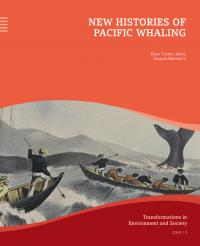
This volume provides new histories of Pacific whaling from untold perspectives.