


Perspectives Article
In Praise of In- and Ill-Disciplinarity, Hybrid Vigor, and Porosity
This reflection illustrates how inter- and transdisciplinarity in the environmental humanities can operate in a transformative way.
This reflection illustrates how inter- and transdisciplinarity in the environmental humanities can operate in a transformative way.
In his essay, Edward Murphy encourages scholars of environmental studies to move beyond traditional confines of academic specialization and fragmentation.
In this piece, Paul Holm reflects on the relevance of environmental-humanities research in addressing contemporary environmental challenges.
Gregg Mitman and Rob Nixon challenge the rigidity of disciplinary boundaries, which restrict alternative ways of knowing the world.
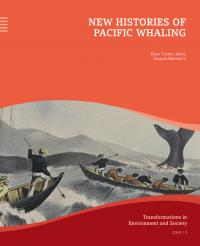
Lissa Wadewitz juxtaposes the American animal welfare movement with American whaling crews.
Nancy Shoemaker considers the four main products harvested in the nineteenth-century sperm whale trade.
Kate Stevens and Angela Wanhalla explore the role of Māori women in nineteenth-century shore-whaling.
Susan A. Lebo analyzes three decades of newspaper articles reporting whaling in Hawaiian waters from the 1840s.
Vicki Luker details the important role played by tabua—or whales’ teeth—in Fijian history.
Noell Wilson details Japanese attempts to integrate modern-day Hokkaido into the Tokugawa political sphere via drift-whale policy.