

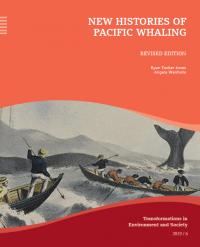
Perspectives Article
When Environmentalists Crossed the Strait: Subsistence Whalers, Hippies, and the Soviets
Ryan Tucker Jones recounts how environmental activist organizations came into conflict with indigenous groups in the Bering Straight.
Ryan Tucker Jones recounts how environmental activist organizations came into conflict with indigenous groups in the Bering Straight.
Adam Paterson and Chris Wilson consider Ngarrindjeri contributions to Southern Australia’s nineteenth-century whaling industry.
Jonathan Clapperton details the importance of whaling to Puget Sound Coast Salish people (Puget Salish) along the Pacific Northwest Coast.
Billie Lythberg and Wayne Ngata explore what it means to be whale people in the modern whaling period.
Joshua L. Reid concludes that the history of Pacific whaling has undergone a scholarly renaissance.
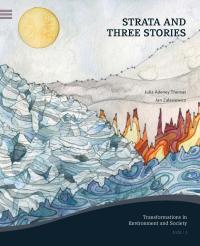
This volume addresses our understanding of the Anthropocene and its challenges, and suggests that multidisciplinarity and storytelling play key roles in devising resilient solutions.
Julia Adeney Thomas explores three types of narrative that are emerging as people try to get to grips with the Anthropocene and their potential for steering our future course.
In this issue of RCC Perspectives, a group of scholars reflect on Ulrich Beck’s influential Risk Society (1986). They seek to critically historicize the concept of risk society, considering how it might be a product of its particular time and place as well as what it means for public debate and scholarship in the early twenty-first century.
In “Historicizing Risk,” historian Lawrence Culver explores Ulrich Beck’s theories on the nature of risk on a temporal scale, and asks how awareness and perceptions of risk changed from the “first” modernity to now, and how that relates to the global issue of climate change.
Historian Uwe Lübken examines how the perception of natural hazards and catastrophes shifts from being historically seen as “Acts of God” to now being viewed as side effects of modernization and a social responsibility.