

Perspectives Article
Irrigation Nation or Pacific Partner? Visions for Postwar Australia
An exploration of the ideas of two postwar Australians, William Hatfield and Flexmore Hudson.
An exploration of the ideas of two postwar Australians, William Hatfield and Flexmore Hudson.
An examination of the role played by Chinese immigration to New Zealand and Australia in the understanding of the environment.
Using the example of the Stirling Range National Park, Andrea Gaynor shows that the dualistic practice of reservation does not necessarily ensure the preservation or conservation of landscapes and ecosystems.
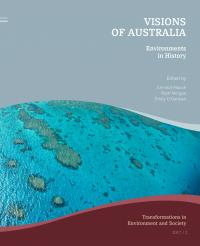
Tom Griffiths argues for the importance of environmental history, and gives us three reasons for the uniqueness of the environmental history of Australia.
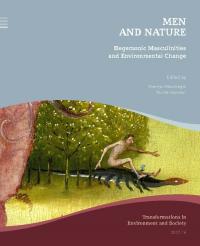
The essays in this collection explore how masculine roles, identities, and practices shape human relationships with the more-than-human world.
Jim Fleming gives an overview of the male-dominated state of climate engineering proposals and criticizes the current masculinist nature of climate intervention.
Erik Loomis discusses the production of working-class masculinity in the US Pacific Northwest, highlighting environmental history’s need to reinstate working people in its studies.
An excerpt from Alex Carr Johnson’s manuscript “Every Day Like Today: Learning How to Be a Man in Love.”
Kathryn M. de Luna explores the gendered micropolitics of knowledge production through a case study of Botatwe-speaking societies (ca. 750–1250) in south central Africa.
Through a reading of two Victorian travel memoirs, Will Abberley demonstrates the contradictions in Victorian attitudes towards masculinity, nature, and emotions.