


Multimedia | image
Photograph: Dome on Runit Island
Covering the crater of a 1977 nuclear test, the “Cactus Dome” contains 84,000 cubic meters of radioactive soil.
Covering the crater of a 1977 nuclear test, the “Cactus Dome” contains 84,000 cubic meters of radioactive soil.
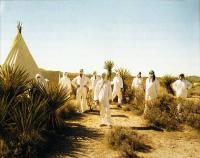
This 1988 photograph by Richard Misrach portrays the influential activist group Princesses Against Plutonium.

Beschädigte Vegetation und sterbender Wald traces the history of the environmental problem of air pollution and its damaging effects on forests in Germany.
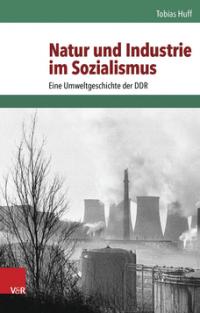
Natur und Industrie im Sozialismus challenges common conceptions that portray the environmental history of East Germany as one of decline, highlighting the existence of advocates of environmental measures within the socialist party.
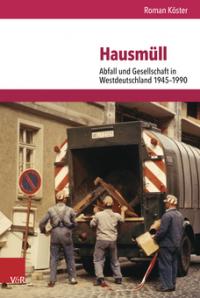
Hausmüll documents the rise of a “new” environmental problem in post-war Germany, that of an increase in consumption and consequently a dramatic increase in waste.
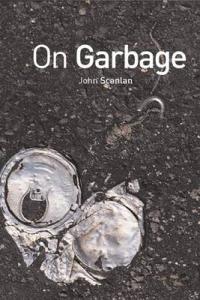
By detailing the waste we have discarded, John Scanlan argues that we can learn new things about the building blocks of our culture; he throws new light on the modern condition by examining not what we have kept, but what we have thrown away.
The film highlights the pollution of the Baltic Sea from agricultural run-off and wastewaters, particularly in the Kocinka catchment of Poland. It offers multiple perspectives from the range of stakeholders, and is the outcome of the Soils2Sea project which ran from 2014 to 2017.

Susie Hatmaker investigates the largest flood of coal ash in United States history in 2008 as an event at once monumental and insignificant.

Examining a case of electric power transmission in California in the early twentieth century, Etienne Benson reveals how industrial infrastructures are embedded in complex environments animated by unexpected agencies often invisible to their users.

Shannon Cram explores the slippery subjectivities of nuclear waste and nature at Washington State’s Hanford Nuclear Reservation, examining how this space is framed as both pristine habitat and waste frontier. She examines Hanford’s biological vector control program through the fruit fly and discusses how vector control uses instances of nuclear trespass to articulate the boundary between contaminated and uncontaminated. She concludes that nature is being recruited to do what the U.S. Department of Energy cannot: solve Hanford’s nuclear waste problem.