"Compost Politics: Experimenting with Togetherness in Vermicomposting"
By reporting on their own and others’ experiences composting with dung earthworms, Sebastian Abrahamsson and Filippo Bertoni argue for a shift in the notion of “conviviality.”
Kelsey Green and Franklin Ginn investigate the response to colony collapse disorder (CCD) of a committed group of beekeepers, examining the philosophies and practices of alternative apiculture along two axes: the gifts of honey and poison; longing, connection, and bee-worship.
Jeremy Brice draws on ethnographic fieldwork among winemakers in South Australia to look at pasteurisation as a way to unsettle the assumption that only individual organisms can be killed, rendering other sites and spaces of killing visible.
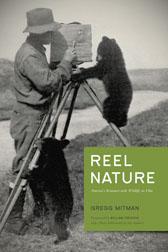
From the early exploits of Teddy Roosevelt in Africa to blockbuster films such as March of the Penguins, Gregg Mitman reveals how changing values, scientific developments, and new technologies have come to shape American encounters with wildlife on and off the big screen.
Lorimer’s article for the Living Lexicon for the Environmental Humanities section discusses rot as a natural process avoided by modern humans, focusing particularly on processes of urbanization in contrast to the nurturing of rot that takes place among natural scientists and managers.
Jamie Lorimer uses the concept of awkwardness to discuss encounters between humans and the Auks, a family of maritime birds found on remote coastlines in cooler, Northern waters.
Lestel, Bussolini, and Chrulew present a bi-constructivist approach to the study of animal life, opposed to the realist-Cartesian paradigm in which most ethology operates.
For the special section “Living Lexicon for the Environmental Humanities,” Kate Wright points to a photograph of two young men laughing as their hair stands up, only to be struck by lightning moments later, as a reminder of how tragic and dangerous the cognitive illusion of human exceptionalism can be. She sees Environmental Humanities as an attempt to address the systemic pathology of a species disconnected from the conditions of its world.
In this article for the special section “Living Lexicon for the Environmental Humanities,” Emily O’Gorman unpacks “belonging” through her research on environmental histories of rice growing in the Murrumbidgee Irrigation Area, located in south-central New South Wales, Australia.
Through a case study of the “invasive alien species” (IAS) narrative in South Africa, Susanna Lidström, Simon West, Tania Katzschner, M. Isabel Pérez-Ramos, and Hedley Twidle suggest that IAS oversimplifies the webs of ecological, biological, economic, and cultural relations to a simple “good” versus “bad” battle between easily discernible “natural” and “nonnatural” identities.