"Compost Politics: Experimenting with Togetherness in Vermicomposting"
By reporting on their own and others’ experiences composting with dung earthworms, Sebastian Abrahamsson and Filippo Bertoni argue for a shift in the notion of “conviviality.”
Looking to the work of Samuel R. Delaney, Sarah Ensor asks what it would mean to use the practice of cruising as a model for a new ecological ethic more deeply attuned to our impersonal intimacies with the human, nonhuman, and elemental strangers that constitute both our environment and ourselves.
Stephen Muecke’s essay for the Living Lexicon for the Environmental Humanities focuses on the attachment of humans and the role this attachment has in the construction of “being.”
Harriet Ritvo’s article for the Living Lexicon for the Environmental Humanities section views the proliferation of introduced species as a symptom rather than a cause, and urges the identification of the real causes through a reconsideration of the morally loaded rhetoric within which biological migration and transplantation are often couched.
Palsson and Swanson’s article explores the relationship between geology and social life in the Anthropocene, using the notion of “geosocialities.”
Jeremy Brice draws on ethnographic fieldwork among winemakers in South Australia to look at pasteurisation as a way to unsettle the assumption that only individual organisms can be killed, rendering other sites and spaces of killing visible.
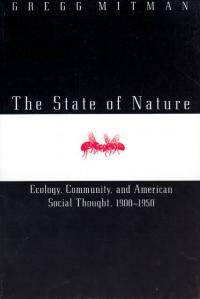
Gregg Mitman examines the relationship between issues in early twentieth-century American society and the sciences of evolution and ecology to reveal how explicit social and political concerns influenced the scientific agenda of biologists at the University of Chicago and throughout the United States during the first half of the twentieth century.
Considering the role of sound in shifting conceptions of the ocean, Ritts and Shiga explore how the US Navy mimicked whale, dolphin, and popoise communication techniques during the Cold War.
Paul Gillen explores the role of conscious human agency leading up to the Anthropocene, suggesting that the development of sentience in the Phanerozoic eon exerted an influence on the interaction of minerals and life.
This article for the Living Lexicon for the Environmental Humanities section explores the way that humans have conceptualized the future, and how this conceptualization has shaped humanity’s interactions with nature.