

Multimedia | book, full-text
Land, Water, Air and Freedom: The Making of World Movements for Environmental Justice
Full text of Joan Martínez-Alier’s Land, Water, Air and Freedom: The Making of World Movements for Environmental Justice (2023).
Full text of Joan Martínez-Alier’s Land, Water, Air and Freedom: The Making of World Movements for Environmental Justice (2023).
This book is a collection of papers from one of the first major US conferences on environmental history, which took place 1–3 January 1982 at the University of California’s Irvine campus, and brought together over 100 scholars active in the field.
Garbage, wastewater, and hazardous waste: these are the lenses through which Melosi views nineteenth- and twentieth-century America. In broad overviews and specific case studies, Melosi treats the relationship between industrial expansion and urban growth from an ecological perspective.
Full text of the book Green Voices: Defending Nature and the Environment in American Civic Discourse.
In his Encyclical Letter Laudato Si’ Pope Francis invokes all humans, believers and non-believers alike, to work together to save the earth from environmental degradation and create a fair and sustainable future for all.
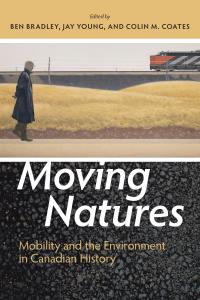
This collection highlights three quintessentially Canadian themes: seasonality, links between mobility and natural resource development, and urbanites’ experiences of the environment through mobility. It divides the intersection of environmental and mobility history into two approaches. The chapters in the first section deal primarily with the construction and productive use of mobility technologies and infrastructure, as well as their environmental constraints and consequences. The chapters in the second section focus on consumers’ uses of those vehicles and pathways: on pleasure travel, tourism, and recreational mobility.
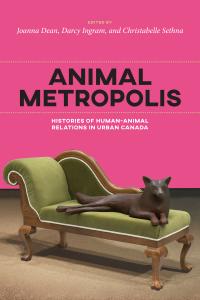
This collection brings a Canadian perspective to the growing field of animal history, ranging across species and cities, from the beavers who engineered Stanley Park to the carthorses who shaped the city of Montreal. Some essays consider animals as spectacle, while others examine the bodily intimacies of shared urban spaces.