

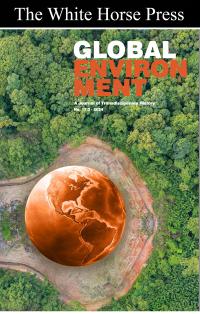
Multimedia | journal article
“Environmental History’s Usable Past: On Reviving the Scholarship of Synthesis”
A reflection on the historical approach to synthesis as a part of the toolbox of environmental history, with a focus on Lewis Mumford.
A reflection on the historical approach to synthesis as a part of the toolbox of environmental history, with a focus on Lewis Mumford.
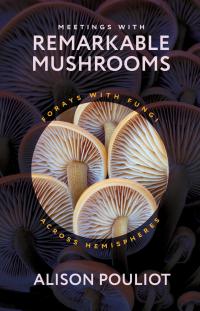
Excerpt from Meetings with Remarkable Mushrooms: Forays with Fungi across Hemispheres by Alison Pouliot.
Traces the changing relationships between the fish resources and the people of the Great Lakes region.

An interview of Kregg Hetherington by Sophie Chao.
A discussion on the terms multispecies, non-human, and more-than-human.
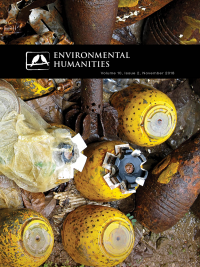
Sophie Chao delves into an unexplored dimension of the agribusiness nexus—the affective attachments of corporate actors to oil palm seeds. Drawing from fieldwork in an oil palm concession in Riau, Sumatra, she highlights the conflicting nature of caring for palm oil seeds.
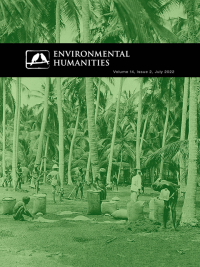
Sophie Chao on “Plantation” in the living lexicon of the journal Environmental Humanities.
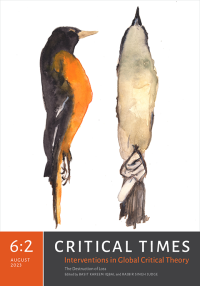

“This article calls for transdisciplinary, experimental, and decolonial imaginations of climate change and Pacific futures in an age of great planetary undoing.”
“This article explores how tropical plantation lifeworlds are made and unmade through more-than-human forms of extraction, extinction, and emergence.”