In December 1989, just one month after the fall of the Berlin Wall, the Friends of the Earth Germany (BUND) and other environmentalists signed the Green Belt Resolution of Hof in order to push lawmakers to create the so-called Green Belt, an environmental protection area along the former inner German border. Because of its isolation, this area had been a refuge for many endangered species, and conservationist sought to keep it as a nature reserve. While originating in Germany, the ultimate aim was to create an ecological zone of protection that would stretch along the former Iron Curtain in Europe and into Scandinavia. On a symbolic level the Green Belt was to unite the formerly divided land and its inhabitants. The result is a living monument commemorating 40 years of division in European history. Stretching along 8.500 km through 22 European countries from the Barents Sea to the Black Sea and integrating 3272 conservation areas within a 25 km zone on either side, the European Green Belt is a unique example of cross-border cooperation and conservation. The pan-European project embodies the words of Willy Brandt in 1989: “That which belongs together, grows together.”
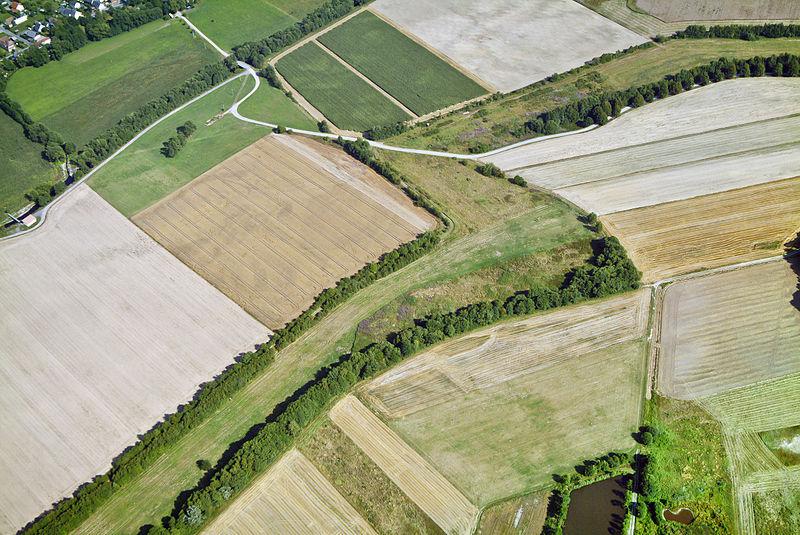
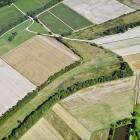
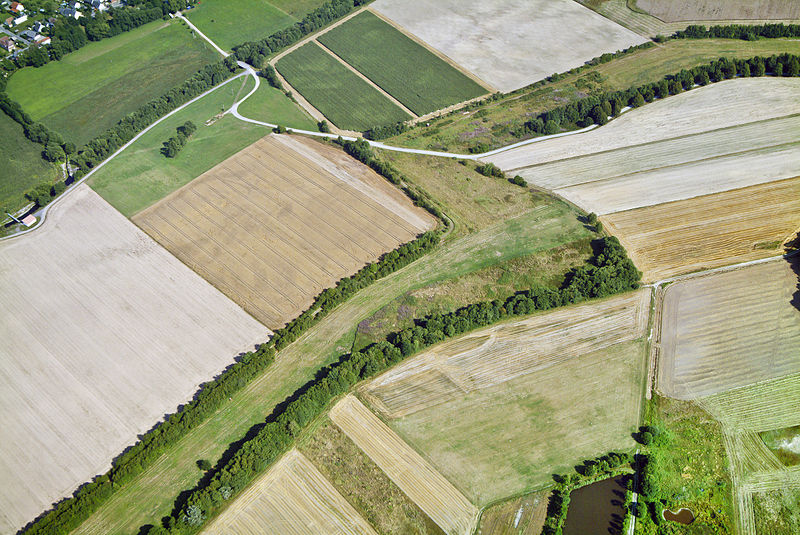
Green belt near Föritz-Mupperg, at the border between Bavaria and Thuringia (2003)
Green belt near Föritz-Mupperg, at the border between Bavaria and Thuringia (2003)
2003 Lubikl
Click here to view Wikimedia source.
 This work is licensed under a Creative Commons Attribution-NonCommercial-ShareAlike 3.0 Unported License.
The groundwork for the European Green Belt was laid during an international conference in Hungary in 2004 initiated by the International Union for the Conservation of Nature (IUCN) and the German Federal Nature Conservation Agency (BfN). In 2003, when the idea of the European Green Belt was officially discussed for the first time, Mikhail Gorbachev adopted its patronage. Geographically it is divided into three sections: The Finnish-Russian and the Norwegian-Russian borders in the North, the Central European border zones, and the diverse landscapes of the Green Belt in Southern Europe.

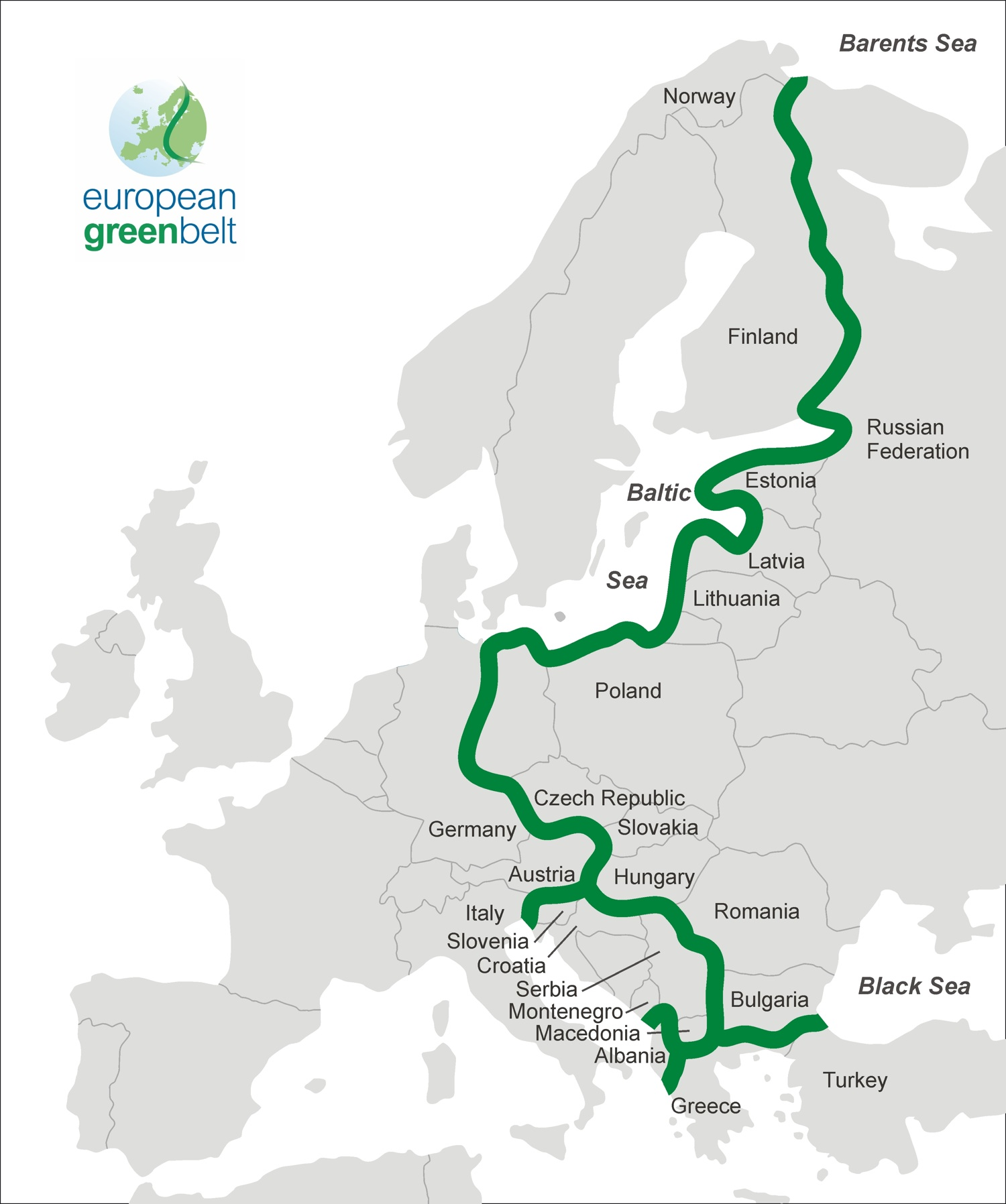
Map showing the path of the Green Belt across Europe
Map showing the path of the Green Belt across Europe
2011 Smaack (wikipedia username)
Click here to view Wikimedia source.
This work is licensed under a Creative Commons Attribution-NonCommercial-ShareAlike 3.0 Unported License.
Composed of NGOs, state agencies and management authorities, the European Green Belt strengthens existing European conservation networks, as well as local communities, through joint projects, for example the recovery of the Balkan Lynx. Another goal of the European Green Belt is to provide a conduit for peaceful relations in the border region of Albania, Kosovo and Macedonia through civil-military cooperation in nature conservation. The European Green Belt Initiative successfully transformed the most prominent symbol of division into an ongoing cross-border natural conservation project.
How to cite
Weinbuch, Sonja. “Nature Unites: Peace and Conservation in the Former Death Zone – the European Green Belt.” Environment & Society Portal, Arcadia (2011), no. 5. Rachel Carson Center for Environment and Society. https://doi.org/10.5282/rcc/2755.
ISSN 2199-3408
Environment & Society Portal, Arcadia
This work is licensed under a Creative Commons Attribution-NonCommercial-ShareAlike 3.0 Unported License.
2011 Sonja Weinbuch
This refers only to the text and does not include any image rights.
Please click on the images to view their individual rights status.
- Engels, Barbara, Angela Heidrich, Jürgen Nauber, Uwe Riecken, and Heinrich Schmauder. Perspectives of the Green Belt, Chances for an Ecological Network from the Barents Sea to the Adriatic Sea? Proceedings of the International Conference 15th of July 2003 in Bonn on the Occasion of the 10th Anniversary of the German Federal Agency for Nature Conservation (BfN). Bonn, Bad Godesberg: BfN, 2004.
- Geidezis, Liana, and Melanie Kreutz. “Green Belt Europe: Nature knows no boundaries.” Urbani Izziv 15 (2004): 135–138.
- Schlumprecht, Helmut, F. Ludwig, L. Geidezis, and K. Frobel. “E+E-Vorhaben 'Bestandsaufnahme Grünes Band' Naturschutzfachliche Bedeutung des längsten Biotopverbundsystems Deutschlands.” Natur und Landschaft 77 (2002): 407–414.
- Terry, Andrew, Karin Ullrich, and Uwe Riecken. The Green Belt of Europe: From Vision to Reality. Gland: IUCN, 2006. View PDF