Animal, Vegetable, Mineral: Ethics and Objects
Contributing authors examine what happens when we cease to assume that only humans exert agency, by considering animals and vegetables as agents rather than mere objects.
The Aldo Leopold Archives in the University of Wisconsin-Madison Libraries Digital Collections serve scholars, policy leaders, and the general public who look to Aldo Leopold for insight and inspiration on how to deal with complex conservation challenges facing society in the twenty-first century.
Adrian Ivakhiv proposes an ecological realism based on humanity’s eventual demise, asking what we can do now and what quality of compost we should leave behind.
Eileen Crist critiques the recent proposal to name our current geological epoch “the Anthropocene.”
This essay explores the possibility of “slow hope” for positive environmental change.
Content
Looking at Leanne Allison and Jeremy Mendes’s interactive documentary Bear 71 (2012), Katey Castellano shows how the environmental humanities can be employed to rearticulate scientific data as innovative multispecies stories.
The Neganthropocene is a collection of essays and lectures focusing on the Anthropocene and the vast semantic horizon it encompasses, from philosophy to politics and the arts, through a renewed thought of the concepts of entropy and negentropy.
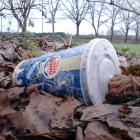
In this chapter of her virtual exhibition “Human-Nature Relations in German Literature,” Sabine Wilke shows how topics of pollution and waste in German-language writing reach back to the nineteenth century, when the production of industrial waste—and pollution of the air, ground, and water—first began to occur on a massive scale. For the German-language version of this exhibition, click here.
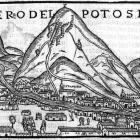
In this chapter of her virtual exhibition “Human-Nature Relations in German Literature,” Sabine Wilke discusses texts that register transformations of landscapes or take a position on their causes. For the German-language version of this exhibition, click here.